

“The 05 File”, a self-biography of the life of Kagusthan Ariaratnam, co-written with award-winning journalist Michael Bramadat-Willcock is an absolute intimate look into the inner workings of the LTTE intelligence wing and the Directorate of Military Intelligence in Sri Lanka. It recounts the harrowing details of the recruitment of Mr. Ariaratnam as a child soldier to the LTTE and then later blackmailed into working as an informant to Indian, Sri Lankan and Canadian intelligence services at different points in his life. The book was self-published in 2024 and made accessible to all audiences in both electronic and print formats available for purchase on Amazon.
Kagusthan named after one of Lord Rama’s avatars was his birth name and then came to be known by different aliases such as Bobby by the Students Organization of Liberation Tigers, Oppilamani, 0-869, 23, and Oppilan by the Tamil Tigers and Major Babu, 05 and Murali by the Sri Lankan security services. When he was just 17 years old, he was recruited into the Liberation Tigers of Tamil Eelam against his will under duress that his family and two younger brothers would suffer had the family not contributed a son to the LTTE cause. The Tigers wants a separate self-governed homeland for the Tamil minorities of Sri Lanka. For three decades until May 2009, the war dragged on resulting in countless casualties from both sides to the conflict – those rooting for the Sinhalese majority government of Sri Lanka and the Tigers. What resulted was not peace, but a fragmented society and a raucous and estranged Tamil diaspora disgruntled over tens of thousands of Tamils that were killed in a genocide.
Murali aka 05, played a dangerous game as recounted in this tale beautifully written with the assistance of Mr. Willcock. This story brings into light how the child soldiers who were recruited from Tamil schools were trained and brainwashed to die and commit suicide attacks on behalf of the LTTE for a desperate cause to create a Tamil homeland. Murali was no ordinary teenager, but a brilliant youngster with razor-sharp wit and immense talent who could have become a brilliant engineer had he had a normal life. Instead, his talents for observation and analytical rigor were discovered by his LTTE handlers to work for the LTTE intelligence wing. His education was unconventional but was learned in war strategy, guerilla warfare, asymmetric warfare, arms, ammunition and weapons. Murali recounts his sophisticated training with the LTTE under Kuman master who was sent to be trained by the Palestinian Liberation Organization (PLO) by the Research and Analysis Wing (RAW).[i] Kuman master had introduced the young cadres to the LTTE ideology which stemmed from Tamil nationalism, Marxist Leninist philosophy and influenced by strategic thought of Sun Tzu, Che Guevara, Mao Tse Tung, Vo Nguyen Giap, Napolean Bonaparte, and Subha Chandra Bose (pg 18).[ii] One of Murali’s greatest feats was the ability to study different types of ships through reading defense magazines such as Janes and gain expertise in naval warfare by training and send Sea Tigers on suicide missions to attack Sri Lankan military assets (pg 59). By reporting to Tiger higher-ups such as Sasikumar and Thinesh Master he gathered intelligence to assist the Sea Tigers Reconnaissance team taking credit for how his information assisted in the assassination of admiral Clancy Fernando of the Sri Lankan navy (pg 60).
What is absolutely fascinating about this memoir is his insider revelations of the specialized wings of the LTTE and their work such as that of the National Intelligence Detention Centre, Sea Tigers Maritime School and Academy, Sea Tiger’s Reconnaissance Team, and Exclusive Economic Zone Maritime Logistics Support Team. The latter had conducted seaborne suicide operations against the Sri Lankan navy and coastguard while securing Tigers’ supply chains through international waters. His love affair with Nala was the plot twist in his LTTE career which was used against him as blackmail by B. Raman Srinivasan who was a RAW mole within the LTTE. The LTTE had banned love affairs among cadres by imposing a strict code of conduct. It was this blackmail that later set his path towards freedom in Canada, as he had secured an audio cassette in which Prabhakaran and Pottu Amman admits having plotted the assassination of Rajiv Gandhi. He had hidden this audio cassette and other incriminating documents in the backyard of his family’s house before he had surrendered himself to the Sri Lankan military (pg 106). This “defection” did not materialize until July 1995 when he had confessed the blackmail of Srinivasan to Thinesh master who as a “punishment” had sent him to infiltrate the Sri Lankan military and work as an insider spy as claimed.
Kagusthan’s biography provides astute details into some of the key LTTE victories, acquisition, and modernization of the LTTE forces. An example was the capture of commander Ajith Boyagoda who became a LTTE Prisoner of War (POW) when the SLNS Sagarawardena was attacked by the Underwater Demolition Team and Suicide Boat Squadron. It provides crucial testimony to how the Tigers deliberately stalled and sabotaged the 1994-1995 peace talks to continue terrorist activities to establish a Tamil Homeland by using this period to enhance their capabilities. The Tigers became a lethal force acquiring submarines, medium landing crafts, utility landing crafts, Surface-to-Air Missiles (SAM) and Stinger missiles that were acquired from Cambodia and the Afghan Mujahideen. It was obvious that the government had no choice but to enter a second set of peace talks in 2001 since the Tigers had the upper hand with a Sea Fleet equipped with Mirage class gunboats and anti-aircraft capabilities. The Sri Lankan navy had to join forces with the Indian navy to cut off LTTE logistical supplies.
The most harrowing account of Murali’s life was his surrender to the Sri Lankan military forces where he was tortured, beaten daily in the night by the Sri Lankan military police and injected with truth serum which had direct impacts on his mental health. It provides a contradictory account of the treatment of POWs by the LTTE and the Sri Lankan government. Kagusthan was not captured by the Sri Lankan forces unlike Ajith Boyagoda whom 05 claims was humanely treated as opposed to how he was treated despite his willful surrender. He worked with the Sri Lankan security services including the Directorate of Military Intelligence being a crucial asset to destroy the LTTE. Without the crucial information provided by 05 to the Sri Lankan military, they could not have gained an edge over the LTTE to re-capture the Jaffna Peninsula through Operation Riviresa between 1995-1996. During this period, numerous atrocities were committed by Sri Lankan soldiers including the brutal gang rape and murder of Tamil School girl Krishanthy Kumaraswamy and massacres of civilian population in Chamani, Kaithady and Navatkuli (pg 161-162).
September 1997 was Murali’s escape from the hellish life he had lived in Sri Lanka after having forced to work with the enemies of his enemies. By this time, he had suffered severe mental trauma through the numerous threats to his life, degrading treatment by the Sri Lankan forces, and being forced to identify dead bodies of ex-comrades and fellow brethren. The incriminating evidence of Rajiv Gandhi’s murder found its way to Shri. B. Raman of the RAW who aided Murali’s escape to Canada. His whole young life he lived in fear for his own family who were threatened to be held hostage by the LTTE and subsequently by the Sri Lankan security forces. Everything he had done until then had been for love and filial piety. Upon arriving in Montreal, he served as an informant to the Canadian Security Intelligence Service (CSIS) and the Royal Canadian Mounted Police (RCMP) to proscribe the LTTE and its foreign elements such as the World Tamil Movement (WTO) from importing violence to Canada. Certain elements from the Sri Lankan intelligence still had a control over his life to spy on the Tamil diaspora which went against his conscience. He reflected on how his path own path to freedom from both the LTTE and state persecution was only possible by escaping to live safely in Canada. This prompted him to support the refugees that arrived in the MV Ocean Lady and MV Sun Sea in 2009 and 2010. Murali did his part to atone for the crimes that he was complicit in against the Tamils. He joined forces with David Poopalapillai of the Canadian Tamil Congress, and lawyer Barbara Jackman to file an affidavit against a “professor” hired by the CBSA as an expert witness. A 106-page report of this expert’s cross examination subsequently led to the CBSA losing its case against the Tamil boat people who were allowed to stay in Canada (pg 186).
Kagusthan’s story is not yet over since he is determined to do more work on behalf of the justice he seeks for his own people who suffered throughout the civil war. He appeals for the ban on the publication of this report to be lifted so that the Canadian Centre for International Justice could carry out a detailed investigation into the 700 people indiscriminately murdered between 1996-1997 in Kankesanthurai, Sri Lanka.
Nathasha Fernand is a junior fellow of the South Asia Democratic Forum. She recommends this book as a valuable source for military schools, training establishments of security forces and security practitioners worldwide due to its insider accounts of both non-state and state security operations.
[i] The Palestinian Liberation Organization was a national liberation movement that emerged in the 1960s for self-determination of the Palestine. They have engaged in acts of terrorism including suicide attacks which the LTTE drew inspiration from. The RAW is the Indian intelligence wing which had a lengthy and controversial involvement with the LTTE and the Sri Lankan government throughout the civil war. India was among the first countries to officially recognize the authority of PLO in 1974. Ariaratnam’s account testifies that the RAW initiated a link between PLO and Tigers upon the request of LTTE leader Prabhakaran to train Tiger cadres in guerilla warfare.
[ii] Sun Tzu was a Chinese military strategist who wrote “The Art of War”. Che Guevara was a Cuban revolutionary leader who supported Fidel Castro to overthrow Batista in 1959 through a guerilla war. Mao Tse Tung was the Chinese communist leader who founded the People’s Republic of China in1949. Vo Nguyen Giap was the commander of the Vietnam People’s Army and was leading the Viet Minh resistance during the Japanese occupation of Vietnam. Napoleon Bonaparte was a French military general and strategist who fought the Napoleonic Wars between 1803 – 1815. Subhash Chandra Bose was an Indian freedom fighter who led the Indian National Army during the Independence struggle. Ariaratnam in his book also explains the sophisticated training received at the LTTE’s Gaddafi base where Thinesh Master encouraged the Military Intelligence Wing to read books such as “By Way of Deception” by Claire Hoy and Victor Ostrovsky and “The Eye of the Needle” by Ken Follett. Through Mathavan Master, the LTTE trainees learned about Gestapo which was Nazi Germany’s military police that gathered intelligence to exterminate Jews, the Shin Bet intelligence wing of Israel which focused on counterintelligence and internal security, and the SDECE of France. The Service de Documentation Extérieure et de Contre-Espionnage operated from 1944 to 1982 which specialized in guerilla intelligence gathering.
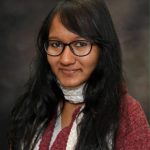
Natasha Fernando
Nathasha Fernando is currently a PhD candidate in études du religieux contemporain (contemporary religious studies) at Université de Sherbrooke (University of Sherbrooke) in Quebec Canada. She is based in Montreal city undertaking a study on the evolution of the discourse of terrorism, victimhood and reconciliation in Sri Lanka and among its diaspora in Canada. Her current PhD research focus is on the intersection of memory politics and mass incidents of violence. Her research interests span terrorism and political violence with an emphasis on religio-political discourse. Her academic objectives are to develop area studies expertise focused on South Asia. She has full professional proficiency in English, Sinhala and French. Her articles are catalogued at MuckRuck (https://muckrack.com/nathasha-fernando-1) and ORCID (https://orcid.org/0000-0002-0606-7893).